Monday, 23 May 2016

BACK IN THE USA

After a few somewhat relaxing days in Ensenada, we pushed off for San Diego, arriving Saturday evening, May 7.  The passage between Mexico and the US was uneventful until we were approaching Point Loma, just outside San Diego's entrance.  That’s when we realized we didn’t have our customs documents together and we were arriving into the States by boat for the first time in 2.5 years!  A bit of scrambling but we got it all together before we docked at the Border Security mandatory dock. The officials checked us in but suggested we stay close to the marina until we collected our cruising permit paperwork on Monday morning.  So we stayed close to the marina, venturing out for park walks and a nice Mother’s Day lunch where I contemplated  the day without being able to see or phone my Mom, who passed away March 19, 2016. I still miss everyday but she’s with us in spirit…


Over the weekend we stayed at the Municipal Police Docks, which are situated at the very end of Shelter Island.  It seems everyone is supposed to have vehicles! There are many luxurious waterfront hotels and the park promenade, which makes the 40 minute walk to the closest bus and 30 minutes to stores easier to take. It’s either walk or pay for a cab and, let’s face it, we’re cruisers and cheap! Tuesday morning we moved across the harbour to the Southwestern Yacht Club for three nights. Their facilities were the same price as the Police Docks but the building was beautiful and we were invited to use their showers, lounge, restaurant, WIFI and a very classy wood paneled  library, cost was only $46.00 US a night (we avoided the expensive bar and restaurant).

Our boat neighbour


Back in San Diego, 2.5 years after our last visit.
Since their Annual Opening Day was scheduled for May 15th we watched a bunch of retired members working like bees buzzing from one thing to another. They were polishing trophies and dusting photographs, staff set up tents and tables outside, gardeners tweaked their flower beds and boat owners paid others to have their yachts polished and decorated for the weekend. It was a busy place and we were glad to get off the boat and bus to town on a few occasions.

Waterfront trail near Rosecrans area. The street above doesn't have sidewalks.

Southwestern Yacht Club at the end of the path, near
the area where the rich and very rich live.

Nestled amongst the highrises were well maintained older hotels and buildings.

Dozens of marinas in San Diego Bay
A highlight for both of us was discovering the world famous Balboa Park.  I remember visiting the San Diego Zoo in Balboa Park when I was a kid but I didn’t realize that it was also home to 17 museums!  Jim and I bought day passes for $45 US each, which gave us access to any 5 museums. We split our time between the Museum of Man, Museum of Photographic Arts, Science Museum, Automobile Museum and the Aeronautical Museum.

The botanical gardens were in the building behind the pond

Museum of Man


British Invasion at the Automobile Museum
Had a super day and really enjoyed each one we visited.  Perhaps next time we’ll tackle the other 12.


Helicopter Tricia at your service...

Jim explaining how an arch works at the Science Centre
There’s a separate  blog with more photos from each museum.


Jacaranda trees in blossom, so much like cherry trees in Victoria

close up of the blooms


We left San Diego Friday, May 13 (I know!) and arrived at Oceanside, California a few uneventful hours later.  Cruising friends we met in Mexico live in Fallbrook, 40 minutes inland from Oceanside. Tom and Bobbi met through sailing and have been together for many years now.  Tom’s sailboat is a Kelly Peterson 44 named Persistence.  We were both hauled out in the boatyard at San Carlos last December so got to know each other pretty well.

Bobbi's spacious motor home

Spacious side yard led to a park behind Bobbi's pad.
Bobbi lives in a great little two bedroom mobile home with a spacious side yard and a strip of a park directly behind her.  Birds were everywhere, their tunes blending in the breeze. She has a very private side yard with plenty of room for outdoor living.

Tom’s home is in Garberville, California, 11 hours north near the redwood forest.  Lots of driving when they’re not cruising together!  They have perfected the art of having a long distance relationship.  We were invited to overnight with them, which was a real treat, at Bobbi’s home.  We spent hours around the dining table talking and having a wonderful dinner.  Bobbi and I got out for a long walk Sunday morning, taking pictures of the various flowers that caught our eye.

 Bobbie's feathered friend

Who loved peanuts and picked the largest ones out first

One of Bobbie's many hummingbirds comes for a visit
Lots of flower pics in a separate blog entry. Time flew by and before we knew it we were reluctantly hugging goodbye Sunday afternoon.  Tom, who drove me to a mall to provision on Saturday, drove us the 40 minutes back to the marina just before dinner.  We felt very connected to this wonderful couple and certain that, like so many other cruising friends, our paths will cross again for sure.

Until next time...

Tricia and Jim Bowen
S/V Falcon VII
email: tandjbowen13@gmail.com

Wednesday, 4 May 2016

DOING THE DASH N BASH

FYI…This entry is short on pictures and long on writing since a number of cruisers in BC are particularly interested in what it’s like to do “The Bash”.

If you’re not interested in this particular entry you might still want to read the separate blog entry WITNESSING A TRAGEDY IN THE MAKING, the true story of two cruisers forced to abandon their 40’ sailboat a week ago.  We heard it all over the radio but, sadly, were unable to physically help them.

“The Bash” is the term fondly used to describe the passage from Cabo San Lucas at the bottom of the Baja Peninsula to Ensenada, nearly 800 miles north and only 70 miles south of San Diego, California. We’re doing the extended version since we’re going all the way back to BC, nearly 3,000 miles.  The term refers to going against both wind and current, causing boats to ‘bash’ north into the seas and wind.


 We left Puerto Los Cabos on Saturday, April 16 and had a leisurely three hour trip to the big open bay at Cabo San Lucas.  Fortunately the anchorage wasn’t as rolly as we remembered from 2013.  We weren’t crazy about spending an afternoon and evening anchored off the beach but it knocked three hours off of our first leg of our passage to Magdalena Bay, 177 miles to the north.

Cabo San Lucas…hummm….would we like to go there by plane and stay in a resort? No!  What a zoo!!! Loads of bars along the beach with music and dj’s doing their best to lure drinkers in.  Then there were large party boats everywhere blaring loud obnoxious music.  No sooner would one pass by us than another would approach from a different direction playing more loud party music. There were massive catamarans doing sunset drinking cruises, complete with live bands and even a couple of “pirate” ships adding to the overall noise.  In between all these party boats were para-sail power boats looking for adventurers and rented jet skis whipping around.  I’m not sure what the appeal is to any of the above.  Guess it takes all kinds.

We headed to bed around 9:00 p.m. and set the alarm for 3:00 a.m., leaving the anchorage at 4:00 in the dark.  While in Los Cabos we bought a secondhand copy of “The Baja Bash II” from a cruiser heading for the South Pacific who no longer needed it.  The book was full of helpful information about cruisers heading to Ensenada including preparation, wind and wave conditions, anchorage details, etc.  Jim reviewed it immediately and picked up a few helpful tips.

Another sailboat anchored at Cabo San Lucas called Pacific Star was anchored near us.  A friend of ours from La Paz named Ray was crewing for Horst and they were heading to San Fransisco where Horst lived. We also reconnected with Dennis Giraud from Ultegra, out of Vancouver.  Dennis, who joined us for lunch at the Puerto Los Cabos Marina, was single handing all the way home to BC.  The three sailboat skippers all agreed to stay in radio contact if possible over the first few days.


The weather was very cooperative on Sunday, April 16 and stayed the way for the first four days. Long low swells flattened out by noon with little wind on Sunday and we motored north making good time, cruising at an average speed of 7.2.  Putting that four blade Max Prop on made a huge difference to our speed!

The further away we got from the tip of Cabo Falso, west of Cabo San Lucas, the more wildlife we spotted.  Humpback whales leisurely swimming north, and  a few seals and sea lions popping up to check us out.  Mid afternoon we spotted a huge patch of white against the shimmering aqua blue water.  We changed course slightly to check it out and found ourselves approaching a huge flock of white terns with sleek black patterned heads and long beaks.  As we got closer they rose, one at a time like popcorn popping, until they were all flying, circling above us in formation before settling down again on the flat oily looking water once we motored on.


During the afternoon we witnessed our own personal porpoise show too!  A dozen bottle nosed porpoises swam straight towards Falcon VII and played in our bow wave for a few minutes. They looked so happy to see us! We both stood laughing, leaning over our pulpit watching them crisscrossing our bow wave and spotted two babies swimming among the adults.  As if on cue they peeled off to starboard, jumping clear out of the water over and over as they dashed away.


We had planned on stopping at Bahia Santa Maria just outside of Bahia Magdelena but the weather said “Keep Going” so we kept going.  The winds maxed out at 15 knots so we unrolled part of the head sail and motor sailed for another 12 hours, arriving at Bahia San Juanico around dusk Monday evening, 284 miles and 39 hours after leaving Cabo San Lucas.


We were tired but happy that we pushed ourselves to get there.  Street lights at twilight showed us where the small town sat perched above the cliffs that provided some shelter from the north wind. There were massive breakers tipped with wind swept spray to the west of us in the shallow bay. Since neither of us had slept much in the last two days we headed to bed right after dinner and were back up by 7:00 a.m. to continue on to Turtle Bay, another 26 hours and 200 miles to the north.

The weather held and Tuesday was calm as we headed out of Bahia San Juanico at the same time as a dozen fishing pangas.  Many just had to get as close to us as they could, often waving as they splashed by us.  The day was uneventful except, for the first time in nearly three years, we encountered patches of fog throughout the afternoon and night.   We saw little wild life except the odd sea turtle, sometimes with a seabird sitting comfortably on its back.


During the afternoon I had an encounter with a frigging frigate.  Frigates were partially responsible for the mess on Falcon VII when we returned from Canada. They’re opportunistic birds and there was NO WAY I was going to let that bird land on our boat!  I screamed like a banshee and yelled at the top of my lungs at the frigate.  If he flew towards our spreaders I ran forward and grabbed an unused halyard and wiggled it violently while screaming “No! You are not going to land on our boat!”  The bird would fly off, circle around and return, flapping it’s wings and air braking for another attempt at landing on the pulpit or top of the mast or a spreader.  I would run back and forward along the side deck screaming at it to the point where Jim wondered if I had lost it and finally gone over the edge.  I laughed, shook my head and said I was fine but I was NOT going to let that bird land, no matter what.  If it had landed it would have been very hard to convince it to leave.  Frigates often damage wind instruments, perched at the top of the mast, or leave droppings like we had in Los Cabos. Eventually the *!#* bird got the message and settled on the water as we motored away.

As the day wore on there was more of chill in the air and we started pulling out sweaters, socks, shoes and long pants towards evening.  We stuck to our 3 on and 3 off watches around the clock. That means that you are on the helm for three hours then off resting for three hours then on again for three hours, etc. until you reach the next anchorage.  Jim always compensated me by spending extra time on the helm while I did the meal preparation time, which can be quite challenging, depending on conditions.

During the night passage Tuesday evening humidity increased considerably so that the inside of the dodger was as wet as the outside.  It was impossible to see anything through it so we kept track of our course on our chart plotter and radar.  Even if we could see out, there was little moon noticeable above the patches of fog.  From time to time I looked up at the bright stars and the full moon directly above us, though I was shrouded in fog. Every time the fog lifted I sighed with relief because it felt less confining if I could at least see a bit of distance around me.
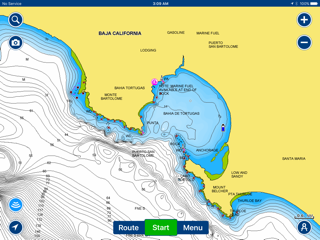


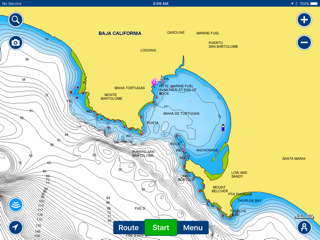
We arrived at Turtle Bay early Wednesday morning, anxious to get fuel then sleep but that didn’t happen.  The fuel dock we remembered from 2013 was gone!  We anchored then two fellows in a panga came out see us.  They had the business of transporting diesel from the old fuel dock to the boats at anchor.  Pretty much every boat heading north or south has to stop at Turtle Bay for fuel since the coast is so isolated. It was extremely expensive but we had no choice but to pay the high cost of fuel in the middle of nowhere.  It was $4.10 US a gallon plus a $400 peso delivery fee.

Since both Pacific Star and Ultegra were anchored we radioed them and discussed approaching weather.  A new weather system was due to hit by late Thursday so we all decided to make a run for it.  So much for sleep! By 11:30 a.m. we were on our way again hoping to reach Ensenada before the 15 – 20 knot winds hit.  Unfortunately the seas kicked up sooner than we hoped, as did the wind and we were forced to change course and go into our bail spot, Bahia San Quintin, 110 miles short of Ensenada.


We were SO close to making it to Ensenada in only 5 days, something we were very proud of! Instead, we found ourselves sitting in Bahia San Quintin for 5 days waiting for the winds and seas to die down.  Pacific Star kept going all the way to San Fransisco, arriving a 13 days later.

Bahia San Quintin is a big open shallow bay.  After two days we re-anchored in a different spot since the swells were so severe that they almost tossed us out of bed like a bingo ball in the cage!  Dennis, on Ultegra, arrived at San Quintin on Friday just before sunset.  Erin on Fairy Tale was there when we arrived on Thursday.  She was single handing on a Catalina 30, heading south. Another boat, I’ll call Cordon, since I don’t have permission to name them, arrived Friday morning having come all the way from San Fransisco in 14 days.  We only spoke briefly to them during Friday but answered a distress call from them at 4:50 a.m. Saturday morning.  They had lost their chain and anchor and woke up when their keel hit the bottom as they drifted into the surf close to shore.  PLEASE READ THE SEPARATE BLOG POSTING ABOUT CORDON’S SITUATION "WITNESSING A TRAGEDY IN THE MAKING".

Sitting at anchor for a few days gets tedious.  The only socializing we did was to chat on the radio a couple of times a day with both Dennis and Erin so on Sunday evening I organized ‘story time’ after dinner.  Fairy Tale, Ultegra and Falcon VII all tuned into Channel 17 where each of us contributed stories for the others to listen to.  It was great to learn more about our fellow cruisers and we all enjoyed it very much, especially Dennis and Erin, who had no other company but the radio for days on end. Well, that’s not entirely true…Erin had her four legged companions, her seagoing cat and dog were with her.


We had been anchored where you see those breakers on the other side of Ultegra.


The anchor bridle held well in the 25 - 30 knot winds but...

Notice the bent thimble  because of the extreme forces on the bridle.


Erin decided to leave the anchorage before dawn on Monday, sick of bouncing around in the uncomfortable swells, wind and waves.  Since she was heading south, the wind and waves were her friends, giving her a much needed push towards Turtle Bay.  We wished her well and hope to hear from her along the line.  Monday was another rough but uneventful day at San Quintin spent reading, watching movies and preparing meals.  We knew there was a small village up the estuary but we couldn’t take the dinghy through the surf to reach it.

Tuesday morning the seas finally settled down and we had a few hours of calm weather for the first time in days so Dennis kayaked over to Falcon VII for a brunch of bacon, eggs, toast and fresh fruit. We admired him, getting into his kayak from the stern of Ultegra, kayaking between the boats then getting out of the kayak and onto Falcon’s side deck while we lurched side to side in the rolling swells.  He even managed to stay pretty dry during the process!  We all enjoyed our meal together and getting to know each other better, finding lots in common.  Since his engine was acting up after Turtle Bay, he was forced to sail the entire distance to Ensenada without using his engine. Consequently, while we hoped for calm weather to motor north, he decided to leave later Tuesday, even though the north winds were blowing 15 – 20 knots again.  We stayed by ourselves until Wednesday morning then pushed off to Punta Colonet, 46 miles further north to break up the trip to Ensenada.   The conditions were tolerable but windy again so we were glad to finally anchor just before dinner time.

Unfortunately Punta Colonet turned out to be just as exposed and open as Bahia San Quintin!  We spent all day Thursday bouncing around in the swells watching the breakers smash against the rugged shoreline.  We hoped the massive cliffs would offer some protection but they didn’t and the northerlies blew relentlessly.

We are anchored here.  Winds blew up to 30 knots at anchor.


Every swell moved us sideways back and forth, back and forth.

Watching weather roll in

It was cold out with the howling winds blowing day and night.
The current was also extremely strong so we were beam on in 15 – 20 knots of wind, meaning we were lying sideways in the swells.  A very uncomfortable way to live but we managed none-the-less. I wouldn’t say we got used to it but we tolerated it as there was nothing else to do. When it came to making meals,  I worked in the galley with my legs spread wide apart trying to keep my balance while I dug food out of the fridge and from inside lockers.  Dishes and food moved across the counter at will so I was constantly grabbing stuff before it hit the sole. I kept the stove gimballed so pots stayed upright as Falcon VII lurched from side to side.

On Friday we thought we had a weather window and decided to leave for Ensenada mid morning but after three hours of pounding into 10 foot swells and winds that increased to 15 knots on the nose again, we turned around and sailed back to the anchorage.  The winds increased to a maximum of 28 knots off the point so it was a very good call by Jim to turn around! By mid afternoon, we anchored again but this time in 25 knot of bitterly cold winds.  We have NEVER anchored in such strong winds in such an open bay but we felt we had no choice!  It was better than pounding into big seas and increasing winds that dropped our speed from its usual 7.2 knots per hour to 4.5 knots per hour, which would have extended our trip by about a day!


Those kinds of conditions also put extra strain on our amazing Yanmar  engine, which we try to avoid at all times if we can.  So we  photographed the breakers around us and waited somewhat patiently the rest of Friday and Saturday for the winds to finally die down.  By Sunday morning we were more than ready to try again for Ensenada, definitely looking forward to stretching our legs on shore and resting in a protected marina.

On Sunday, May 1 the wind gods looked upon us favourably and we motor sailed 10 hours, arriving at Cruiseport Marina, Ensenada at 4:00 p.m.  Dennis was already there, having arrived on Thursday so he ran over to our assigned slip and grabbed our lines. Pats on the back, juice in the cockpit and a delicious, but expensive, dinner followed in town Sunday evening.

So we dashed for 4 days, then anchored and bashed for another 10 days.  Total days from Cabo San Lucas to Ensenada: 14.  Total Distance: 829 miles!

We plan on hanging around Ensenada for a week, catching up on chores, cleaning the boat, doing loads of laundry and meeting other cruisers.  We’ll do another blog once we get into California.  Until then…

Jim and Tricia Bowen
S/V Falcon VII
email: tandjbowen13@gmail.com

WITNESSING A TRAGEDY IN THE MAKING

“Hello. This is Cordon (not the real boat name since I don’t have permission to use it). We’ve gone aground.  We’ve lost our anchor and chain and our boat’s washed up on the beach”.

Those were the words from a shaken woman speaking on Channel 16 on the VHF radio at 4:50 a.m. on Saturday, April 23. The drama unfolded over the next 3.5 hours as a very windy night became a gusty dawn in our rolly anchorage at Bahia San Quentin on the Baja Peninsula. The 40’ sailboat was anchored a mile south of us and 110 miles south of Ensenada, Mexico.

Bahia San Quintin...sorry the image isn't better but it give you an idea of the land shape. 
Cordon arrived at San Quintin on Friday, April 22 seeking what little shelter the wide open, shallow bay afforded since the building seas were making safe passages north or south questionable. Sometime during the early hours of Saturday morning, Cordon lost its anchor and chain and drifted 2.5 miles east in 20 knot of winds.  The owners slept below, only to awaken when they went aground on the lee shore to the east, during a falling tide.

We were also in San Quintin seeking shelter, having made the decision late Thursday afternoon that it was better to change course and motor sail northeast towards the exposed-to-the-wind but none-the-less safe anchorage of San Quintin instead of pounding into heavy seas and continuing on towards Ensenada. We had plenty of food and water on board and could stay at anchor for a number of days or even a week or two, if necessary, rather than risk damage to ourselves or Falcon VII.  Had we continued, we were faced with at least 24 more hours of constantly pounding into head seas to reach the safety and protection of Ensenada Harbour. For the last 26 years of cruising, whenever we’ve left an anchorage we’ve pre-determined a ‘bail out’ spot for just such a purpose.  Though we’ve rarely had to use it, this was one of those times.

An example of the surf in the anchorage
When we arrived after dark on Thursday evening, April 21, we spotted one other boat called Fairy Tale anchored near the northern point of Bahia San Quintin.  Fairy Tale was a Catalina 30 and the female skipper, Erin, was single handing her south from Ensenada to La Paz and also seeking shelter. We radioed back and forth with Fairy Tale on Friday as the winds built, both of us relieved to be safely at anchor.  We enjoyed reading and relaxing for the first time in a week while doing the Bash north to Ensenada, even though our boat was rolling from side to side fairly severely. Cordon arrived in the anchorage Friday morning, followed a few hours later by Ultegra, a Beneteau First 415 also heading north to Ensenada from Cabo San Lucas.

Ultegra arrived near dusk Friday evening and the skipper, Dennis, had a quick dinner then headed to bed, exhausted.  We were loosely buddy boating with Dennis Geraud of Vancouver, having both left Cabo San Lucas the previous weekend, anxious to finally start the passage to Ensenada.  When Ultegra’s engine developed overheating problems in Turtle Bay he was forced to shut it down and sail, single handing nearly 200 miles to San Quentin before continuing to Ensenada.  With San Diego’s proximity to the Baja Peninsula, the US Coast Guard often monitor Channel 16 transmissions in Mexican waters.  The Coast Guard radio operator picked up the transmission between Ultegra and Falcon VII when he alerted us of his situation.  The radio operator contacted Ultegra and established a radio schedule to stay in touch with Dennis during his three day passage to Bahia San Quintin, to get an update of his position and ensure he was still safe. We've always been very impressed with the United States Coast Guard and this was one more example of their professionalism and great value to the boating community.  Jim and I were very relieved when Dennis sailed into site from the south end of San Quintin’s expanse just before dark on Friday evening after a long but uneventful sail.  He was in excellent spirits but physically exhausted.  Fortunately he was able to run his diesel engine without overheading, just long enough to anchor beside us in the swelly, shallow bay.  By this time the seas and winds were building and he was concerned that his overheating engine might not start again if a problem arose during the night and he had to move.  Since we had been in frequent VHF communication with him during his three day passage, we assured him we would continue to monitor Channel 16 overnight in case he needed assistance.

Imagine being in a surf line with those waves pounding at you!
We headed to bed around 11:00 p.m. and eventually drifted off to sleep in the constant motion of Falcon VII.   Northerly winds were blowing in the low 20’s by this time. When we heard Cordon’s urgent call on the VHF at 4:50 a.m., Jim jumped out of bed and headed to the VHF radio to respond. We knew that it was unlikely anyone in authority outside the bay would have heard the call because of the geographic nature of our location, which included three volcanic peaks to the north, preventing a VHF radio signal from travelling very far.  Jim radioed the skipper that unfortunately we didn’t feel we could physically assist as we would go aground in anything less than 7’ of water and Cardon was already in 5’.  In addition to how shallow the water was where Cardon had gone aground, the tide was falling making it impossible for us to approach them in Falcon VII.  We even contemplated launching our inflatable dinghy but again felt it unsafe to traverse the open bay in the gusty conditions with the building and confused seas.  Fortunately, since we had cell coverage and a phone number for the US Coast Guard in San Diego, we immediately phoned them to apprise them of the situation and they relayed the information to the Mexican Navy.  We provided Cordon’s coordinates and relayed that the damaged vessel was being pushed further onto the shore in breaking waves.

To begin with, Cordon’s skipper was opposed to involving the Mexican Navy, preferring to find someone on shore who could help him once daylight arrived and businesses were open because he couldn’t afford to pay for a tow from the Navy.  Jim radioed back and reassured him that the Navy would not charge him if he, his crew or his vessel were at risk, an idea which he eventually accepted.  As it turned out, an 80’ Mexican Navy cutter was relatively close and was able to make radio contact with Cordon’s skipper.  They manoeuvered their ship so they were within site of the vessel in distress.

For the next hour we monitored multiple transmissions between the Mexican Navy, the sailboat skipper and his distraught wife.  We could tell from the wife’s voice, often speaking in the background, that she was very shaken, panicky and extremely anxious, while the skipper seemed somewhat unconcerned in comparison, perhaps not coming to terms yet with the severity of their situation. We thought he might be physically and psychologically exhausted and unable to think clearly since he repeatedly told the Mexican Navy cutter that he only needed his boat to be towed to a boat yard where it could be lifted out of the water and he could check for damages.

Little progress was made about a rescue plan over the next two hours between the Navy and the ill-fated sailboat being pounded onto shore.  Short transmissions and pleas from Cordon were interspersed with long periods of radio silence.  We tried to visualize what might be happening on the Navy cutter.  We tried to imagine ourselves as both the people in distress and the Navy personnel helping them.  We realized that all attempts to help needed to be well thought out before any action was taken.  One challenge appeared to be the difficulty in communicating between the English speaking boat owners and the Mexican Navy radio operator, whose second language was English.   At times we had trouble understanding him due to his strong Mexican accent.  Perhaps he wasn’t the usual radio operator but the only crew on board with passable English.

Over the next hour the radio operator intermittently radioed a series of questions which revealed the identities of the skipper and his wife and that Cordon had been on a non-stop passage from San Fransisco for 14 days. They had entered Bahia San Quintin because they were exhausted, everything was wet down below and their sails were torn.  The Navy then ascertained that the engine was still working while they were being pounded in the surf.  The operator repeatedly asked if they should wait while Cordon’s skipper contacted his insurance company and the skipper repeatedly responded that he didn’t have any boat insurance.  Around dawn the skipper radioed that there were locals shouting to him from the beach.  They wanted to help but he couldn’t understand them; the noise of he wind howling hindered further attempts at communication with those on the beach.

Around 7:30 a.m. Cordon’s skipper informed the Navy that his engine had finally failed and they now urgently needed a tow away from shore.  A moment later his sobbing wife came on Channel 16 and made another tearful plea to the Navy and to us to help them.  She thought they were leaving the scene and she begged them to stay. Her voice was full of emotion when she added that she didn’t even know if her skipper was still onboard since he had gone out on deck and hadn’t returned.  We felt helpless just listening to her but didn’t want to confuse communication by giving our emotional support over the radio.  The Navy’s response to the woman’s pleas was that they were not leaving. We felt that the two people on board needed emotional encouragement over the radio to keep their morale up, but at that point decided not to butt into the conversation.  On several occasions, the operator asked if they wanted to be taken off the boat but the skipper kept refusing, repeatedly asking for a tow to a boat yard to assess damage.  It was clear to us that even a 20’long boat with a powerful outboard engine would have trouble reaching them with the surf breaking as it was.  We felt great empathy for the skipper and his wife. We listened and slowly ate our breakfast in the safety and protection of our sturdy, comfortable sailboat.  I had tears streaming down my face, envisioning how wet, cold, frightened and helpless they must have felt and knowing how helpless we felt sitting only a two short miles away.

Jim and I talked at length about whether it was appropriate for us to intervene and contact Cordon’s skipper on Channel 16 to let him know that the closest haul out facility was not nearby in the village of San Quintin but rather in the Port of Ensenada, 110 miles to the north and impossible to reach due to the current severe weather conditions.  We agreed that the skipper needed to know that information and transmitted accordingly.  Cordon’s skipper was unaware that there was a weather system brewing outside the bay, perhaps because he was so fatigued.  Jim then respectfully suggested that the skipper should start thinking about what his other options might be.  Jim said that he felt that it was time for the skipper to put the safety of his crew and himself above that of his boat, even if it meant abandoning ship. Eventually Cordon’s skipper acknowledged the severity of his situation and said he would give thought to abandoning his sailboat.  A moment later he radioed back that the Navy personnel had just arrived onboard and he had to go.  Around 8:20 a.m. he radioed again to say that they were going to abandon ship after all. He thanked us for our help and we wished them well as they started gathering the few documents and belongings they could, in preparation for leaving their sailboat to the ravages of the pounding surf.

For the rest of the day Jim and I felt crushed, like we had a huge weight on our shoulders having witnessed such an unfortunate tragedy.  Hearing the skipper say they were going to abandon ship saddened us incredibly.  We didn’t know the couple on Cordon but, as cruisers we have communicated with hundreds of fellow cruisers over the VHF radio and, even though we may not actually meet them in person, a bond is formed.  Since we had obtained Cordon’s skipper’s cell phone number, we contacted them a few days later and found out that local missionaries were putting them up in San Quintin and would provide transportation to the Mexican border.  The skipper said they were not doing well and he sounded very disheartened with their situation.

Knowing what terrible circumstances the crew of Cordon faced became an opportunity for us to discuss how we could improve our own safety procedures on Falcon VII.  These now include:

  • Monitoring Channel 16 24/7 while cruising and at anchor.  This is a decision each skipper must make themselves; we are not suggesting every cruiser should do this, but if we hadn’t monitored Channel 16 that night, no one would have heard Cordon’s cry for help and notified the US Coast Guard and subsequently the Mexican Navy.  The two single handers in the anchorage didn’t have their radios on (completely their choice) and slept through the wind-swept night, unaware of what was happening until after dawn when we filled them in on the VHF radio.
  • We have also now decided to do hourly anchor checks anytime we are concerned that winds and weather warrant it to ensure that our anchor is holding and that the bridle hasn’t chaffed. Those checks are done together, with one of us staying in the cockpit keeping an eye on the other on deck.  Imagine if one of us fell overboard during an anchor check and the other didn’t realize it for a few minutes because they were below!
  • Life jackets are always worn on deck, while doing anchor checks and while underway. 
  • We've downloaded an anchor alarm app onto our iPhone.  We set up the parameters according to the length of our anchor rode and the distance we could travel before the alarm sounds.  It's a loud annoying sound that will wake us up to deal with the situation.
We hope the above will help other cruisers open a dialogue about safety procedures on their own boat, encourage skippers to check their anchors for weak links, frayed rode or rusty chains and to consider increasing the level of awareness of what can happen to them on a dark and stormy night.

Jim and Tricia Bowen
S/V Falcon VII
email: tandjbowen13@gmail.com